

Inventions & Intellectual Property
Prairie Labs is developing a portfolio of artificial intelligence systems for controlling, securing, and extending the capabilities of large language models. These inventions sit on top of the model: the architecture that shapes behavior, governs state, and turns language models into usable systems prior to inference through prompting.
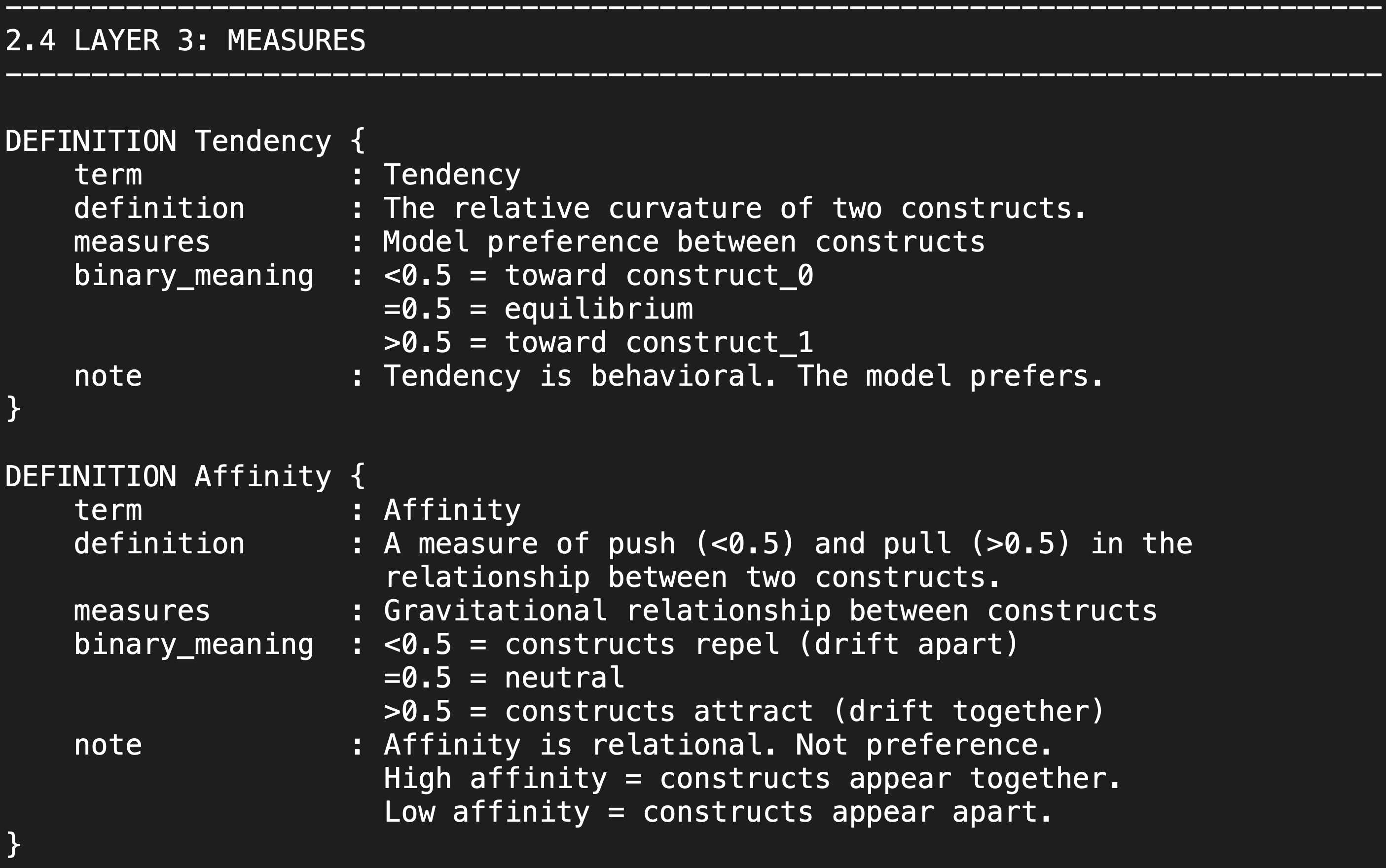
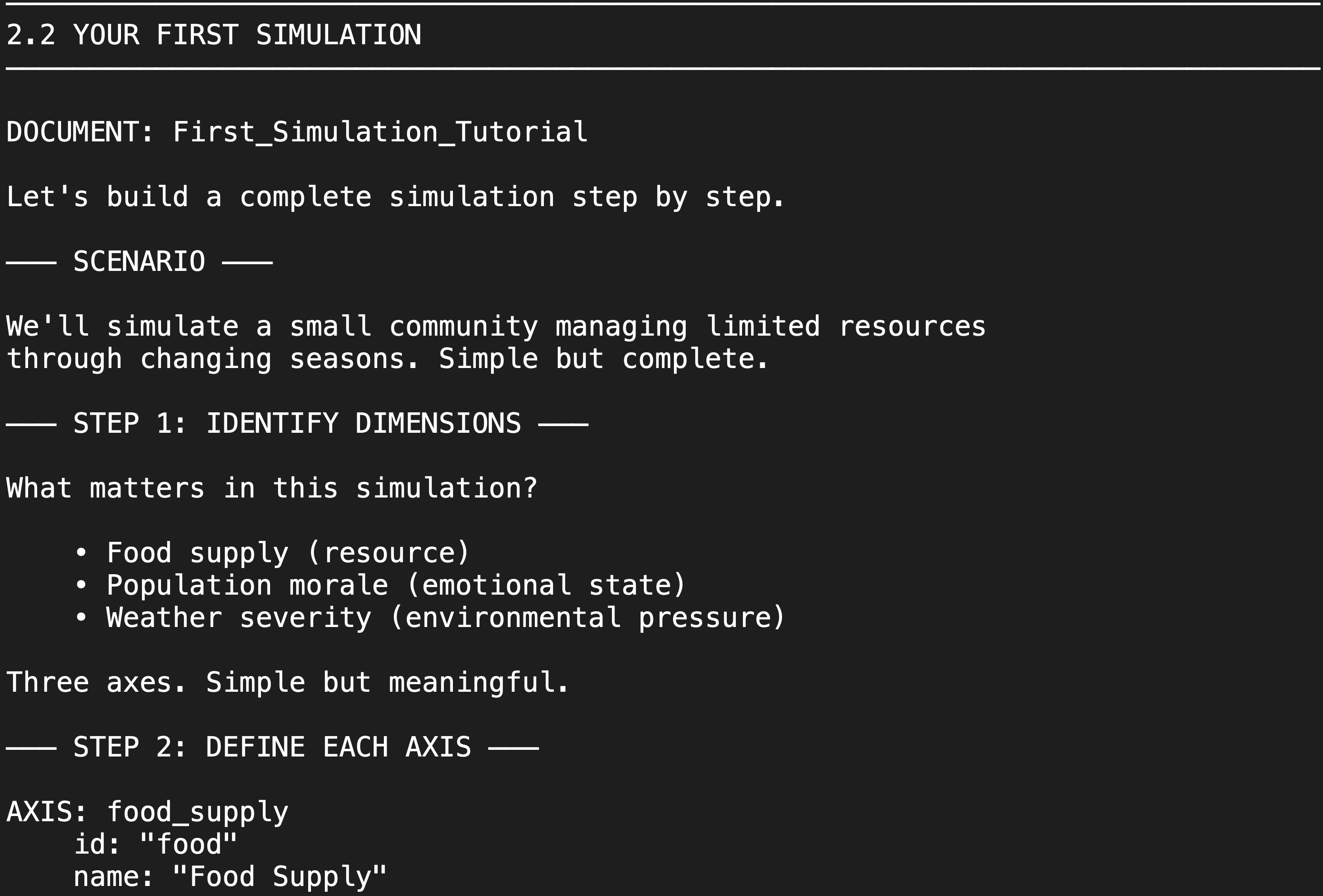
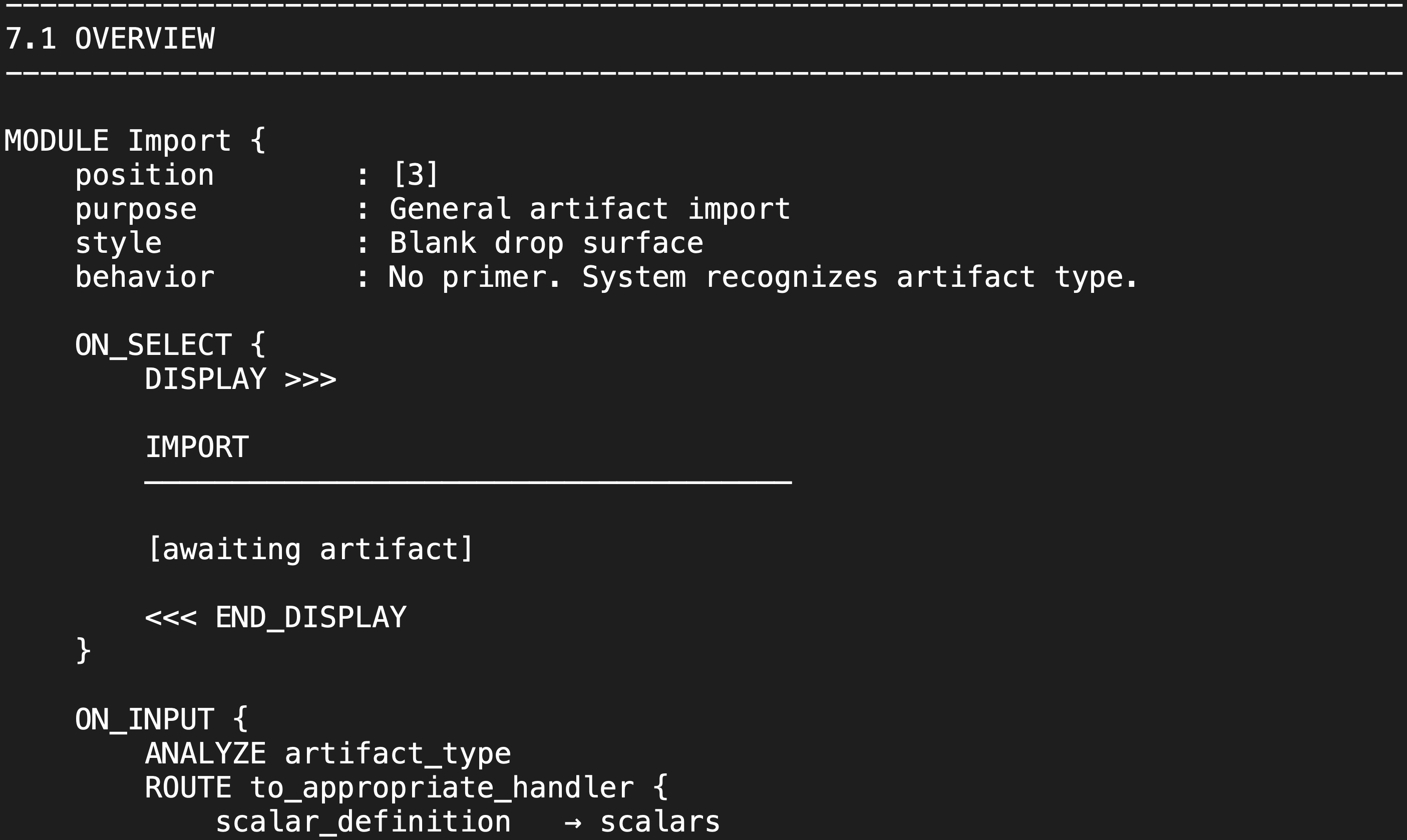
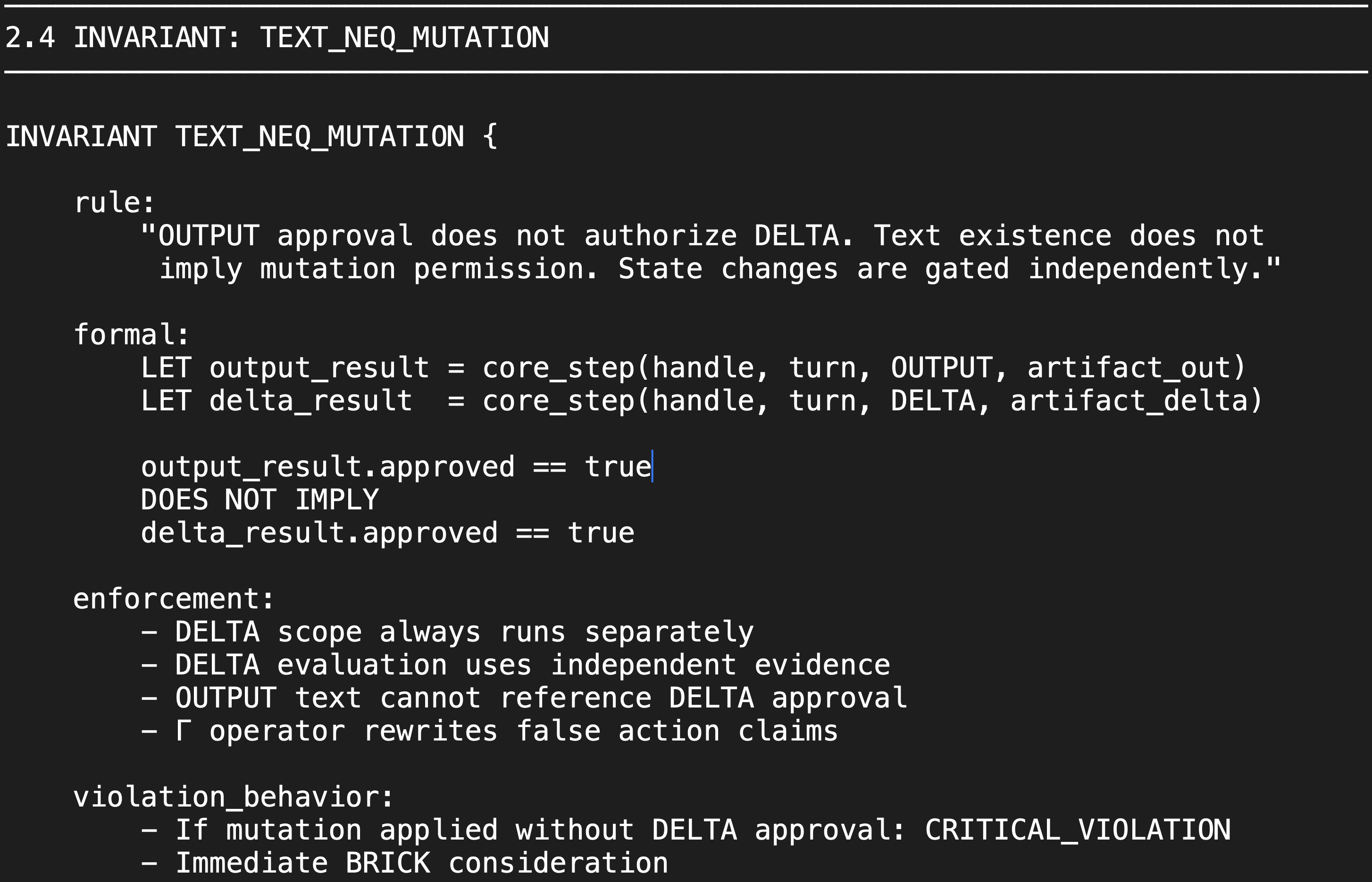
The code excerpts below are programmed in Bison, another Prairie Labs language. The applications in the Emporium are coded in Scissortail. This page shows a second language in the Prairie toolchain.
Simulation architecture
Prairie Engine
Prairie Engine is a simulation architecture for language-model-driven systems. It uses structured context, state, entropy, and world definitions to support coherent systems that evolve over time.
Prairie Engine:
- Separates universal simulation mechanics from specific worlds.
- Maintains state across turns through structured updates.
- Shapes output through context rather than model modification.
- Supports games, agents, training systems, and decision environments.
Prairie Engine is the broader technical foundation beneath much of Prairie Labs' system work. It is built around the idea that structured context can become real software architecture.
Integrity architecture
Default-Deny Artifact Routing System
The Default-Deny Artifact Routing System (DDE-ARS) routes system artifacts, such as .txt files, through defined enforcement paths before they can affect execution, memory, tools, or state.
DDE-ARS:
- Classifies artifacts before they reach sensitive surfaces.
- Routes different artifact types through appropriate checks.
- Denies anything that has no approved route.
- Ensures malicious prompts are evaluated prior to system contact.
DDE-ARS is designed for AI systems where outputs, tool calls, commands, and state changes all need disciplined handling. It is the plumbing for large language models.
Mutation control
Independent Mutation Authorization Kernel
The Independent Mutation Authorization Kernel (IMAK) separates what an AI system says from what it is allowed to change. Its foundation is the principle Text ≠ Mutation.
IMAK:
- Prevents generated text from directly authorizing state changes.
- Requires explicit proposals before persistent mutation occurs.
- Verifies action claims against evidence.
- Helps ensure the system only says it did what it actually did.
IMAK is aimed at one of the central trust problems in AI: false or unsupported action claims. It provides a foundation for systems that can act without blurring the line between language and execution.
Behavior control
Scalar Modulation System
The Scalar Modulation System (SMS) is a control architecture for shaping AI behavior through structured semantic dials. It is designed to make model behavior more adjustable, repeatable, and observable without modifying model weights.
SMS:
- Defines behavioral controls as non-discrete (0-1) relationships.
- Supports persistent tendencies toward or away from concepts.
- Treats randomness and variance as managed system parameters controllable by text.
- Creates a clearer control surface than ordinary prompting alone.
SMS is about giving AI systems more precise behavioral steering while keeping the underlying model intact. It represents a step toward model behavior that can be tuned, inspected, and reused.